
Acupuncture for stress and anxiety – does it really work?
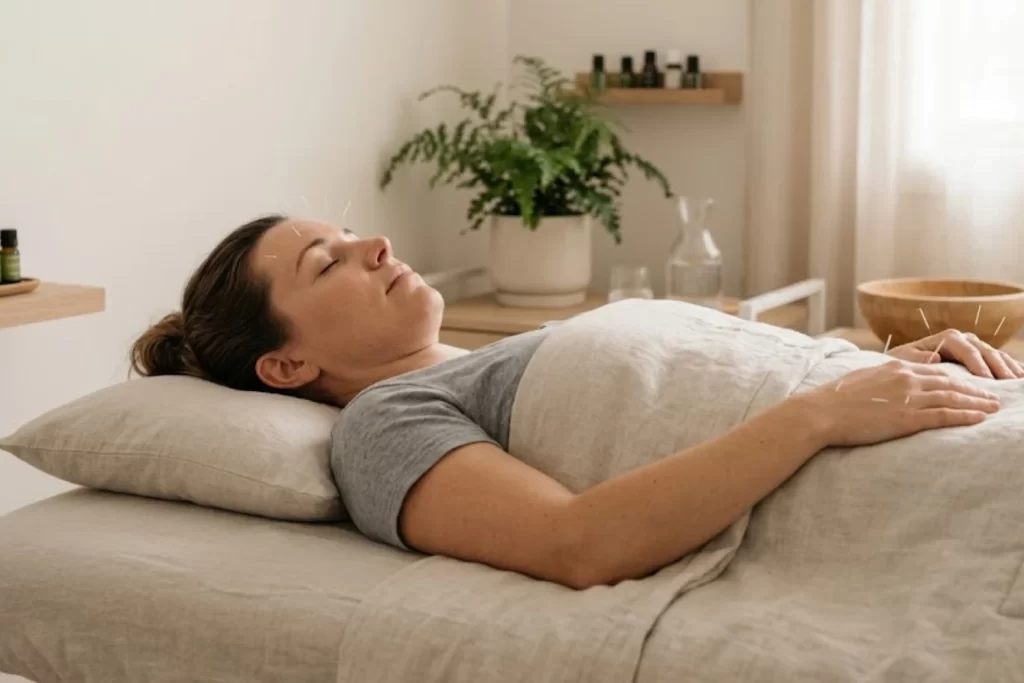
Acupuncture for stress is something a lot of people are curious about but not quite sure whether to trust. It sounds appealing – lie down, needles go in, stress goes away. But is there anything real behind it, or is it just a very expensive nap?
The honest answer is that there is solid science here, and it is worth understanding before you book a session or write it off entirely. Here is what is actually going on.
What is acupuncture and where does it come from?
Acupuncture has been part of Traditional Chinese Medicine for over 2,500 years. Practitioners insert very fine, sterile needles into specific points on the body – points that, in Chinese medicine, correspond to pathways through which the body’s energy (called Qi, pronounced “chee”) flows.
When those pathways get blocked, the thinking goes, the body falls out of balance. Acupuncture is used to restore that flow.
If that sounds a bit abstract, the Western medical interpretation is more concrete. From that angle, needle insertion physically stimulates nerves, muscles, and connective tissue, which sets off a chain of responses in the body – hormonal, neurological, and circulatory.
Both explanations point to the same outcome: the body starts doing something useful.
A few things worth knowing:
- Acupuncture is recognised by the World Health Organization as a legitimate treatment for a range of conditions
- It is used in integrative medicine settings alongside conventional care in many countries
- The needles are nothing like an injection – most people barely feel them go in
Acupuncture for stress – what is actually happening in the body?
Stress is not just in your head. When you are under pressure, your body releases cortisol, your heart rate climbs, your muscles tighten, and your sleep suffers. These are physical events, not just feelings.
Acupuncture addresses several of them at once:
- Cortisol comes down: Multiple studies have measured cortisol levels before and after acupuncture sessions and found a consistent drop. Less cortisol means your nervous system gets some breathing room
- Your body shifts out of survival mode: Chronic stress keeps you locked in “fight or flight.” Acupuncture activates the parasympathetic nervous system – the side that handles rest, digestion, and recovery
- Endorphins and serotonin are released: The needling process triggers your body’s own feel-good chemicals. This is why many people feel an unexpected lift in mood after a session, not just relaxation
- The stress response system gets a reset: The hypothalamic-pituitary-adrenal (HPA) axis is what controls how your body responds to stress. Acupuncture has been shown to help regulate it, which is particularly relevant for people whose stress has become chronic rather than situational
None of this requires you to believe in energy meridians. The physical mechanisms are measurable and increasingly well-documented.
What about anxiety – is it the same thing?
Not quite. Stress usually has a clear cause – something is happening, and your body is responding to it. Anxiety is more persistent. It hangs around even when nothing is obviously wrong. The two often overlap, but they are different to treat.
For anxiety, acupuncturists tend to focus on points that directly calm the nervous system and reduce the kind of mental restlessness that anxiety produces. Some of the most commonly used ones:
- Yin Tang (GV 24.5) – Sits between the eyebrows, and has an almost immediate quieting effect on the mind. It is one of the first points most practitioners reach for in anxiety cases.
- Heart 7 (HT7) – On the inner wrist, used specifically for emotional unsettledness, racing thoughts, and broken sleep.
- Pericardium 6 (PC6) – Inner forearm, particularly useful for the physical symptoms of anxiety, like a tight chest and palpitations.
- Stomach 36 (ST36) – Below the knee, used to bring the body back to a grounded state when someone feels scattered or overwhelmed.
Your practitioner will not use all of these in one session. They will select based on what your particular picture looks like – which is why a proper consultation at the start matters.
What the research actually shows
There is more evidence here than most people expect.
A 2021 systematic review looked at acupuncture specifically for anxiety disorders and found consistent reductions in anxiety scores across multiple trials. Separate research has compared acupuncture to cognitive behavioural therapy for mild-to-moderate anxiety, finding broadly similar outcomes, which is a meaningful comparison given how established CBT is.
For generalised anxiety disorder in particular, the results are among the most convincing in the literature.
That said, a few things are worth being clear about:
- For severe anxiety or diagnosed anxiety disorders, acupuncture on its own is not enough. It works best alongside professional psychological support, not instead of it
- One session will not fix anything. The effects build over time, and consistency matters a lot
- A well-trained practitioner makes a real difference. This is not a treatment where all providers are equal
The broader point is that acupuncture for anxiety relief is not alternative medicine in the fringe sense anymore. It is used in integrative health settings globally, and the clinical evidence, while still growing, is genuinely positive.
What your first session will actually look like
Most people feel some nerves before their first acupuncture appointment, which is understandable. Here is what you can realistically expect.
- You will start with a detailed conversation. Your practitioner will want to understand your stress patterns, sleep quality, digestion, energy levels, and general health history. This takes longer than you might expect, but it shapes everything that follows.
- You will lie down on a treatment table, usually face up, in a quiet room.
- The needles go in at selected points across the body – not necessarily near where you feel your symptoms. They are extremely fine, and most people describe a brief dull pressure or tingling, not pain.
- Then you rest, usually between 20 and 40 minutes. The room is quiet and warm, and a lot of people fall asleep.
- Afterwards, you will likely feel calm and a little heavy-limbed. Some people feel emotional in a quiet, settled way. Drink water, go easy for the rest of the day.
For stress and anxiety, expect to come in for around 4 to 8 sessions before concluding. Some people feel a shift after session one or two. Others take a bit longer. Your body is not on a fixed timeline.
Who tends to get the most out of it
Acupuncture works particularly well for people who:
- Have physical symptoms tied to their stress – persistent headaches, shoulder and neck tension, broken sleep, digestive issues
- Want something that does not involve medication, or want to reduce their reliance on it
- Are already in therapy and want a physical complement to the mental work they are doing
- Have been running on empty for a long time and need something that addresses the body, not just the mind
It is worth flagging that certain blood-clotting conditions and some stages of pregnancy require caution. If any of that applies to you, mention it before your first session – a good practitioner will adapt accordingly.
How acupuncture fits into the bigger picture at Body D-Tox
At Body D-Tox in Preston, Melbourne, acupuncture is offered as part of a wider set of therapies, which is genuinely how it works best.
On its own, acupuncture does a lot. But if you are dealing with serious stress or anxiety, combining it with other treatments that support the nervous system tends to produce better, longer-lasting results.
Some combinations that work well together:
- ZeroBody Dry Float – The sensory stillness of a float session gives the nervous system a deep reset that complements what acupuncture starts.
- Infrared sauna – Helps with cortisol, circulation, and physical tension, particularly for people who carry stress in their bodies.
- Massage and lymphatic drainage – Works on the muscular tension that stress accumulates over time, especially in the neck, back, and shoulders.
The idea is not to pile on treatments for the sake of it. It is that the nervous system responds better when it gets consistent, layered support – not a single intervention every few weeks.
So, does it work?
For most people dealing with everyday stress and anxiety – yes, it does. Not in a dramatic overnight way, but in the kind of steady, cumulative way that genuine recovery tends to happen.
The science supports it. The clinical use of it has grown significantly over the past two decades. And the people who stick with it consistently tend to notice real changes – in their sleep, their tension levels, their general capacity to handle pressure.
It is not a replacement for therapy or medical support if you need those things. But as a physical intervention for stress and anxiety, it is one of the more grounded options available.
Questions people usually ask
How many sessions do I need before I notice anything?
Most people start with 4 to 8 sessions. Some notice something after the first one; for others it takes three or four before the shift becomes obvious. Weekly sessions tend to work better than spacing them far apart, at least to start.
Can it help with panic attacks?
It can, particularly for reducing how often they happen and how intense they are. The research on acupuncture and panic specifically points to its effect on the autonomic nervous system, which is what drives the physical side of a panic attack. That said, panic disorder usually needs psychological support alongside it.
Is it safe?
Yes, when done by a properly trained practitioner using sterile needles. Mild bruising or temporary soreness at needle sites happens occasionally. Anything more serious is very uncommon and almost always tied to poor practice.
How fast does it work for anxiety?
Some people feel calmer after session one. For anxiety that has built up over months or years, meaningful change tends to show up after consistent sessions over 4 to 6 weeks.
Can I use it alongside other treatments?
Yes, and it often works better that way. It pairs well with therapy, meditation, massage, sauna, and float therapy. There is no conflict with most medications either, though it is always worth mentioning what you are taking during your consultation.

Register to subscribe to “Balance” our Mind, Body and Soul Newsletter
By registering your interest, you are agreeing to our Privacy Collection Statement and our Privacy Policy and opting in to receive communications from Body D-Tox. You can opt out at any time*

Opening Hours:
Monday 9 am–5 pm
Tuesday 9 am–6 pm
Wednesday 9 am–9 pm
Thursday 9 am–9 pm
Friday 9 am–5 pm
Saturday 9 am–5 pm
Sunday 10 am–5 pm